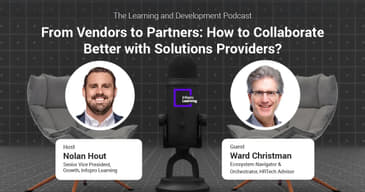
Discover how to build stronger relationships with solution providers, improve collaboration, align goals, and create lasting value through strategic partnerships. Also Listen - From Vendors to Partners: How to Collaborate Better with Solution Providers?
Podcast Takeaway:
• Strong partnerships require open communication and alignment on clearly defined shared goals.
• Vendors must collaborate; it takes a village to serve today's customers well.
• Many partnerships fail when they are just a press release without action.
• The ultimate goal is creating happy, common customers who drive more business.
• To make partnerships work, you must wildly incentivize your frontline sales teams.
• Hiding your vendor list in RFPs creates major risks and integration failures.
• Partners reduce friction by investing time to understand each other's business culture.
• A seamless partnership wins bids by simplifying the overall experience for customers.
• Use external advisors to gain a wider perspective when setting business goals.
• Partnerships need ongoing management through touchpoints like quarterly business reviews (QBRs).
[00:00:09] - [Speaker 0]
Welcome to the Learning and Development Podcast sponsored by InfoPro Learning. As always, I'm your host, Nolan Hount. Joining me today, we have Ward Christmann, founder and chief advisor of HR Tech Advisor. For over a decade, Ward has been collaborating with solution providers to maximize the value of their partnerships with other solution providers and also advising them on which other partners out there they might want to connect with, open up new lines of revenue, creating new partnerships. So with all this expertise in working with these solution providers, there's really nobody better to talk to about how do we maximize the relationships with these organizations.
[00:00:47] - [Speaker 0]
And we know that this is a very apt topic right now. Organizations are looking to scale quicker. They're looking to be a little bit more flexible. And we know that a great way to do that is through partnerships with vendors of all types. So that's really what we're going to talk about today is how do we collaborate better with our solution providers.
[00:01:07] - [Speaker 0]
With that, I'd like to welcome our special guest Ward. Ward, welcome so much to the podcast.
[00:01:14] - [Speaker 1]
Well, you, Nolan. Looking forward to the conversation today.
[00:01:18] - [Speaker 0]
And as we start with everyone, what we like to do is just better understand how you got into this space in the first place. You know, what is your origin story of how you landed as the founder of HR Tech Alliance? And I mean, I know I've looked at your LinkedIn and those that follow Ward know he is a serial entrepreneur, has been a founder. I mean, is just a very, has had many leadership positions. So I'd love to learn, where did you start and then how did you get here?
[00:01:48] - [Speaker 1]
Wow. I'll try to be concise. It's been a long career and keeps on going. It's fun. And you know, coming out of college as an engineer, I was lucky to land a job as an engineer.
[00:02:02] - [Speaker 1]
After five years, I'm like kept looking at this thing called HR. Boy, there's so many things with technology can do to help. I'm still a tech geek all my life. But there's these things called resume scanners and stuff like that. I really got interested in that.
[00:02:18] - [Speaker 1]
My wife was running a temp agency at the time and I'm like, boy, this and then all of a sudden somebody shows me the internet. I'm like, alright, this is so much more fun than building nuclear power plants. And launched one of the first online job boards before the internet was even commercialized in the early nineties and
[00:02:35] - [Speaker 0]
Oh really? Wow.
[00:02:36] - [Speaker 1]
Just never yeah, never left it and ran a job board for eight years. And then this is my fourth time founder role. And found a couple other companies and now it's more on the advisory and ecosystem level for HR in terms of, you know, where the vendors need to collaborate so that the common customers get good service.
[00:02:58] - [Speaker 0]
So when you start with, you know, engineering, I would say categorically, people would say that role might be on the yin to the yang of HR learning and development, people development. Is there some, but I mean, was the origin that you just happened to start with the job board or did you find yourself more attracted to that more personal side of the business?
[00:03:24] - [Speaker 1]
Well, it was, as a junior engineer, it was a consulting company, right? So we were always looking for our next projects and always bidding on projects. And they would send me down to HR to get the resumes of people they think might be in that bid package and say, here's our people, here's our team. And it was a disaster, know? Like, hey, the FedEx leaves at five.
[00:03:46] - [Speaker 1]
Go, go, go. I'm like, I can't find half of the resumes. The ones I did find are a mess. Photocopying is not going to help. It's going to look awful.
[00:03:56] - [Speaker 1]
What do we do? And like, I don't know. Well, there's things called computers now. You can turn the handle pops out a fresh resume. And we could even connect them together and have a talent network.
[00:04:09] - [Speaker 1]
And so I sent this suggestion up to the CEO, which became Raytheon engineers. And, he calls me in the office. I'm like, uh-oh. It's like, what are you thinking about here with this talent network? And I'm like, well, why not?
[00:04:25] - [Speaker 1]
You know, right now it's a good old boy network. And, that's how the big package went out. It's like, who do you know that knows this about that? And I'm like, we have computers. We can put that in there.
[00:04:36] - [Speaker 1]
So ever since, it's just like, there's so many possibilities and it's still largely untapped, surprisingly in my mind, because I keep hearing people reinventing it. Yeah. Yeah. Oh yeah. We're going to inventory the skills and make them available online.
[00:04:51] - [Speaker 1]
I'm like, wow, cool.
[00:04:53] - [Speaker 0]
It was, was it Workday that just bought a company that does that? It was either Workday or some other company. Just bought a company in that field that again is basically running the business in the same way that that's been operated for, for a while. Is it Raytheon? Is it Raytheon like the defense contractor Raytheon?
[00:05:09] - [Speaker 1]
Yeah. They bought the United Engineers.
[00:05:11] - [Speaker 0]
Yeah. And interesting. They, they, they went on to, you might know, you know, create Vertex Learning Solutions and they, so they spun off a learning division. Cause that was, so it's kind of coming all, all first full circle here back to kind of the solution providers. So, well, that's an interesting, you know, path forward.
[00:05:31] - [Speaker 0]
Thanks for sharing that. Getting into the podcast a little bit, one of the first things that we were wanting to talk about, and again, with this subject of, and, and you're very apt of, we have these solution providers in learning and development and some in HR, and you've worked with so many of them. And, and we realized that we need to be working with them better if we want to grow and scale. So, we want to talk a little bit about how we can collaborate better to create that partnership. I think nobody really wants an order taking type thing, but sometimes it ends up getting into that.
[00:06:06] - [Speaker 0]
So, the first thing I want to just touch on is like the, and we connected before the show and we said one of the big things was communication, right? Open communication and shared goals. Can you talk a little bit about how those two things can start that partnership on the right foot?
[00:06:23] - [Speaker 1]
Yeah, that's a great point because mean, it's pretty much anything in life, right? Communication, if it's flawed or people are misunderstood, it usually doesn't go well. Yeah. Yeah. Despite best intentions, right?
[00:06:38] - [Speaker 1]
So how do you clearly articulate that to a partner that maybe doesn't know your business, doesn't know who your customers are. They just know they want to talk to your customers because if you can refer them in, they'll have a better chance of at least getting heard and maybe win the deal, Which is true. But you know, how do you get to that level of trust? And communication's a big part of it. And reminding them that you're there.
[00:07:03] - [Speaker 1]
Some of these solutions that keep growing and growing, right? Either through acquisition or building and now AI, you can build stuff like crazy fast. The customers are like, we don't know what to do. Right? They need somebody, you know, like InvoPro to come in and say, well, we'll figure it out for you.
[00:07:19] - [Speaker 1]
Right? That's fine. But still, know, what are you going to go with? And the people in the vendors that work there trying to talk to the practitioners and say, Here's why you need what we're doing or here's why you need to switch to the way we do it. You know, if they work for a company with multiple solutions, some of them hundreds like Oracle and know Yeah.
[00:07:44] - [Speaker 1]
Hundreds of solutions. They don't even know what they have, let alone what partners have. Who's going to discover the customer's problem and help them solve it? My opinion, it takes a village.
[00:08:00] - [Speaker 0]
Yeah.
[00:08:00] - [Speaker 1]
Right? Vendors are talking to each other and saying, Hey, we share these common 10 customers. We should probably talk regularly. If nothing else, let's talk about our common customer and how can we better serve them? Because if we wait for them to figure it out, it's not going to end well.
[00:08:19] - [Speaker 0]
Yeah. I mean, we, we, we partner so InfoPro learning, one of our good partners that we have is, is Open Sesame and I, and it's interesting because when we started the partnership with them, it was, it was like just a random idea. We didn't know where the value would come and we weren't really sure. And to be quite frank, we looked at them as just, well, you know, they'll do what they're going to do. We're going to do what we're going to do.
[00:08:46] - [Speaker 0]
But then we had this, this opportunity with an organization who was looking to transform their financial institution. They were just doing like payday loans and they wanted to be a full financial institution. And so we realized we're like, well, they need a bunch of content that we don't have that our partner does have. And when we talked with them, we won the bid. And when we talked to the company, we asked them, what was it that set us apart?
[00:09:13] - [Speaker 0]
They said, were the only company who seemed to be able to have off the shelf with custom learning, with custom leadership. And it seemed like we were just working with one company instead of two. And so it was really interesting. I'm happy that we had that, that win very early on in our relationship because it did help us better understand that if you, if you don't look at everything as a one plus one equals two, you can actually get to the one plus one kind of equals three. But I think that the key, what I found throughout all of this is again, kind of aligning what I was talking about is aligning on those shared goals, right?
[00:09:49] - [Speaker 0]
And in this case, this company that we were working with, large finance company, they, they knew the goals that they wanted. Right. And they just said, listen, can you help? Can an organization help me do this? And I think when we partnered with Open Sesame and we just said, let's not focus on who's doing what, let's just focus on, can we meet these goals and what do we put in front of a client that, that, that is a compelling offer?
[00:10:18] - [Speaker 0]
That really, it really did make it a much different experience than just, we're going to do what we do, you're going to do what you're going to do.
[00:10:27] - [Speaker 1]
Yeah. Well, I mean, you got to start somewhere, but sadly, at least my experience in the HR industry, and that's really the most I know about any industry, is a lot of the press releases have come out announcing partnership was because a couple of people met at a conference. They talked about it. They realized there were some synergies or common clients, something. We should partner.
[00:10:51] - [Speaker 1]
Let's do more of that. Let's get more common clients, right? Let's Yeah, bring yeah, business together. And press release goes out and then they don't have a plan and if nothing happens. Yeah.
[00:11:03] - [Speaker 1]
Then do it again next year.
[00:11:05] - [Speaker 0]
Yeah. I mean, the, the, the, some of those are just like, that is the nature of that is the extent of the partnership is the press release. And then you kind of move, move on with your day. But so, so how do you, how do you break out of that? How, what have you seen work the best?
[00:11:21] - [Speaker 0]
You know, whether, you know, we're talking again about, about both. So, because the same thing happens, you know, when, when a client partners with an organization, when we see it all the time, right? A client will say, we're looking to streamline our content development partners, right? We want to kind of move everything from, we've got 15 different boutique agencies that do these different things, and we want to kind of bring it all within one, you know, RFP goes out, they select a company, but then everybody still kind of works with these other 15 companies. And so, know, it's the equivalent of the press release and then you move on.
[00:11:59] - [Speaker 0]
How do you get away from that? How do you what have you seen work as a good blueprint for success?
[00:12:07] - [Speaker 1]
Well, yeah, it's an interesting struggle because I remember ten years ago, I was on the media team or blog squad, back then they called it that, what became Unleashed, it used to be HR Tech World.
[00:12:21] - [Speaker 0]
Oh yeah.
[00:12:22] - [Speaker 1]
In Amsterdam. They're like, Hey, we want your help interviewing some of the speakers from the conference. I'm like, Sure. Like, Who would that be? Oh, just this guy named Josh Berson and Jason I have a book.
[00:12:37] - [Speaker 1]
I'm like, seriously? My first time working with your event? And that's who you put me on a camera with? It was he was still with he just sold to Deloitte his first
[00:12:50] - [Speaker 0]
Deloitte, yeah.
[00:12:52] - [Speaker 1]
Brilliant. But I asked him, you know, about that kind of thing. I'm like, well, you know, it seems like employers want one throat to choke, you know, and that kind of thing, right? But reality is they have all these systems and it keeps growing. And then, you know, overlap and it just becomes a mess to manage.
[00:13:10] - [Speaker 1]
Why don't and you know, some of the people from the bigger orgs like Oracle or whatever would be like, well, we have everything that our customers need. Why would they buy from anyone else? Like, I don't know. You tell me, why does your average customer have 53 HR systems? Good point.
[00:13:29] - [Speaker 1]
I'm like, that's a good point. Who's going to help them, right? And, yeah, the vendors have to work together to help those common customers and even prospects. Because for them to look at, you know, demos and whatever, it just becomes extra challenging for people that don't do it all the time. Right?
[00:13:50] - [Speaker 1]
They need to hire somebody that knows the space well enough that can help them kinda sort boil down or distill down to the, you know, the core elements. What's important for them from a solution standpoint, technology, you know, integration capabilities, data flow, security. I mean, there's checklist after checklist. I'm preaching to the choir with you, I'm sure. But, it's a lot.
[00:14:18] - [Speaker 1]
And if you don't do it all the time, even if you do, it's a lot to keep up with. And then you put on top of that, well, do they play nice with each other in the sandbox? Cause we're going to put in this new learning, whatever.
[00:14:29] - [Speaker 0]
Right.
[00:14:29] - [Speaker 1]
AI something or other learning thing. Is it going to, you know, work with our other solutions? Is it going to like, you know, be adversarial or the people behind the company going to help us interface with the rest of our players? Cause we don't have the staff to manage all these, you know, behind the scenes things. It's quite something.
[00:14:56] - [Speaker 0]
Yeah. Yeah. That's always a critical challenge when you're working, you know, when you bring on a new vendor, you know, again, whether you're an org out there that's looking to bring on a new vendor or you're a vendor looking to partner with somebody, I think those early days become really important of, again, like we need to create this kind of operating rhythms that we're all working in the same shared capacity. And one of the things we talked about was not just communication, but like a shared goal. And, and, you know, people who have listened to this podcast know that, you know, kind of the big thing that I like to focus on a lot of clients is business performance.
[00:15:36] - [Speaker 0]
And like, if you focus on that, if that's your North Star, is business performance, That really at least helps everybody understand why am I here? And knowing what is that performer? What is the needle that we're trying to move? Right. Because then we all understand how we are, as you mentioned, what are we playing for in the sandbox?
[00:15:58] - [Speaker 0]
What is the goal of this game? How, how do you think, like what, how do organizations help establish those business goals upfront?
[00:16:12] - [Speaker 1]
Find some good advisors that have been there, done that many times internally. I recommend externally because once leave internal, you can get a little more you know, wider focus on, or visibility into what is going on out there beyond your own little fiefdom or, you know, community. Yeah. There's, at least in our sphere, we're tracking 60,000 companies that are largely in the HR tech and learning tech type ecosystems. And we count payroll and things like that.
[00:16:52] - [Speaker 1]
As people call it, start to call it work tech and things like that, it kind of expands. Then you look at players like Zoom, they're building work technology stuff. They're in the space now too. It's like crazy. But, you know, in terms of your question around like what we call FinTech or financial tech, that's a whole world too, some respects that often, you know, people get paid, things like that.
[00:17:16] - [Speaker 1]
That tends to be a key metric and things, you know, in terms of goals, right? Are you going to aspire to? Well, you know, HR and learning and anybody that's responsible for their own goals needs to be aware of what the business goals are and hopefully align with them and have those communications with the other team members, the heads of these silos, if you will, or hopefully they're not silos. Because yeah, it can all affect each other. If you're not aware of what the business goals are or even, you know, financial goals or, you know, new product launches, well, do we have the staff?
[00:17:58] - [Speaker 1]
Can we train the staff that we have? Can we, you know, reallocate our staff to learn this for this new product launch or this new market we're going into? All these questions, right? Do you have the tech to help, pivot? Is it in multi language?
[00:18:12] - [Speaker 1]
Are you going be hiring locally? Do we need to partner with an EOR? It's a lot. We don't go there as much as we are focused on our bubble of 60,000 vendors.
[00:18:27] - [Speaker 0]
Yeah, yeah, just the 60,000 vendor list. And, you know, so one of the things that I've always found that works to kind of create that, you mentioned like, you know, this aspect of like money and how are people compensated. And, and I always say, you know, if there's a, if there's an incentive for everybody to play together in the way that they want, That works wonders for clients, vendors, everybody, right? And if they're all incented the same way, and I say it's always important to understand what that incentive is. I talk about this a lot in the component of AI actually.
[00:19:08] - [Speaker 0]
So we announced recently a, actually a guarantee that if an organization works with us to transform their L and D org, we will save them 30% on their cost of running that business. But what we really are talking about is not, you know, okay, your business used to run a million bucks. Now it's going to cost 700. We're saying no, like we're saying, don't take your budget to 1,000,000, keep your budget a million, but do $300,000 more. You're going to be able to do 1,300,000 of work for a 1,000,000.
[00:19:46] - [Speaker 0]
Isn't that what you want? We want to be doing more with less and we're aligned on that business impact. We have said upfront, we will do it 30% less. So that's what their motivation is. Okay.
[00:19:57] - [Speaker 0]
Am I just wanting to spend 700,000 or am I wanting to reach a local larger audience, whichever it is, hold us to it. We'll put it in the contract, we'll sign it. It's what you want. It's what I want. But, but I've also seen when the I recently just worked with a partner of ours Colossian.
[00:20:14] - [Speaker 0]
I'm not sure if you're familiar with them. They do a lot of AI, like avatar videos, things like that and training. And I was talking with their, their CEO and head of partnerships. And they were saying, you know, what really motivates your team? And I said, listen, you can, you can do whatever you want to InfoPro as a company to reward me, to reward whoever, but you need to focus on the tip of the spear, right?
[00:20:41] - [Speaker 0]
If you don't wildly incentivize our salesperson to send work your way, they're not going to give you the time of day because they're the ones talking to the customer. They're the ones listening. They're the ones doing whatever. And so, you know, would you rather spend a $100 giving it to me or marketing, or would you rather spend a $100 to the person who's talking to as many clients? And so I think not just understanding like, is that goal, but understanding drivers around that goal and the motivation of hitting that target or maybe not hitting that target can be a very powerful tool to get both people on the same page.
[00:21:22] - [Speaker 1]
Couldn't agree more. Certainly, yeah, the people that would say at the street level or field level that are talking to the companies as they're evaluating different approaches or systems or processes and you know, who they're gonna either partner with or pay to help rent their software, whatever the relationship's gonna be. Those people out in the field, having these conversations are the ones that, yeah, they need to be engaged, incentivized. I think in the green room, I mentioned that, you know, some of these larger organizations or vendors that have big suites and all that, that sounds nice, you know, if you just could have one solution. And reality is, it won't happen that way.
[00:22:11] - [Speaker 1]
It just hasn't. So I don't see it happening. It'd probably get worse. So thanks to all the solutions that AI is popping out these days, like toast out of a toaster.
[00:22:20] - [Speaker 0]
Yeah.
[00:22:21] - [Speaker 1]
So, How are you going to bring it? You need to bring it back to the business impact and make sure that if you're going to put something new in or on top or replace something, you gotta be sensitive to what's that gonna cost besides the benefit, You know, the investment, time loss, you're gonna have to pull people off other projects. And even if you outsource all of it to some level, yeah, you can't just let that happen. Somebody's got to manage it, right? It takes some thought and helpful.
[00:23:01] - [Speaker 0]
You mentioned the sensitive, you know, the sensitivity of it. And so, and again, so, so Ward and his org, lot of what they specialize in is actually working with organizations like an InfoPro, but mostly more on the HR and the L and D side, but to find other partners in which they can get value from. Really, that's really, really his focus. And so, a pain point that, you know, something that's always really sensitive there, as you mentioned, at the start of this is how do we kind of share clients? How do we do so in a meaningful way?
[00:23:37] - [Speaker 0]
And protecting our clients rights to privacy and data integrity and laws, you know, not just their own personal wishes. And, and, and then also like, you know, I know there's always this bit of, well, if I let them talk to my customer, they're just going to steal them. You know, they're going to take business from me. So there's a lot of sensitivity there. Obviously, you know, at InfoPro, we see a lot of sensitivity working with our clients as well, saying, if I bring in this company, are they going to represent me in a way that I am comfortable with?
[00:24:13] - [Speaker 0]
And are they sharing the values that I have and, and what are they going to do if I unleash them to the greater get? So there's a lot of, anytime you bring in anybody else to, to work in, in, in alongside you, there's a lot of sensitivity there. How do you, I guess, make sure that like that is a collaborative environment that has a really little amount of friction involved? Like there's always going to be a little bit of friction, but how do you try to, I mean, we've already covered probably a couple of them, what other ones maybe that we haven't brought up helps to reduce that friction and ensure whether you're going vendor to vendor or vendor to internal teams, they work more as a partner versus, just like one other company that you're kind of as your second cousin twice removed?
[00:25:02] - [Speaker 1]
Well, yeah, certainly circles back to just communication with that partner. And, know, sadly is people don't take the time to bring them up to speed on what they have to offer, how they do business, what their culture, all that. Some of that you start learning through osmosis if you're a close partner and you're spending time with them. Go to their partner summits, go to the QBRs, QBRs, things like that. But for what the customer wants and needs, that can change over time pretty quickly too, right?
[00:25:35] - [Speaker 1]
So it almost has to be in some levels in the moment. Hey, this customer's got this issue or they want to implement AI, but how's it going to affect, you know, for doing it in learning development, how's it going to affect their performance system or their pay cycles or you know, this stuff is intertwined whether you want it to be or not. Let's talk about that. What's your position on how can you handle it? Have you seen this before?
[00:26:01] - [Speaker 1]
Have you worked with other partners like us? Know, and do all that behind the scenes before you even meet that common customer. Then through the cycle, buying cycle, implementation cycle, then certainly go live and beyond, you got to keep having those regular contacts. The biggest mistake I've seen is a lot of the RFPs or RFIs, whatever you want to call it, they don't have anything about, well, if we're looking at different vendors, how do they fit in the ecosystem that we have? Just because they're a Workday partner and we're on Workday doesn't mean it aligns with our values as a customer or our budget, they think, Oh, well.
[00:26:45] - [Speaker 0]
Or the other 50 tech, HR tech software in our company. Yeah.
[00:26:51] - [Speaker 1]
Well, exactly. And so it's complex, but if you come back to the focus on who's the common customer, what do they care about? And if they're happy in our world, that's the ultimate goal is we have happy common customers who want to go out and help us get more business from other people that want to be like them, happy customers. You know, it sounds silly, but there's very few people out there saying, Hey, here's our solution stack and we love them and they work hard. It doesn't, sometimes things get broken, but they work together.
[00:27:27] - [Speaker 1]
They communicate regularly on our interests, our behalf with us. And a couple of years ago, did a presentation at the conference board out in New York. It was virtual. It was in the middle of the pandemic, but they have fortune 50 companies pay a lot to be part of their membership and they bring in guest presenters. I was one talking about the HR tech ecosystem, getting your, if you're an HR practitioner, how do you get them all to play nice in the sandbox?
[00:27:58] - [Speaker 1]
And, you know, I asked them some, I did a pre event survey about how many systems they have. And A, do they keep track of them? Do they have a list that's updated? And most of them did. And is that just in HR, IT and learning tech and whatnot?
[00:28:17] - [Speaker 1]
A little bit lower. Do they share it internally outside of that group, you know, beyond like with the managers or whoever might be using these tools and technology? Keeps going down and down. Well, hey, you got 50 providers that are somehow working to keep That's our company just HR, let alone FinTech and all this other stuff. Do they know who else is in the soup?
[00:28:52] - [Speaker 1]
And very small number at that point. It's like, well, if they don't know who's in there, how are they going to, you know, keep you happy? Don't get it. And they, so they started to realize, maybe we should publish that list. I mean, because once they're contracted, why shouldn't they know?
[00:29:10] - [Speaker 1]
Right? I don't know.
[00:29:12] - [Speaker 0]
Yeah, that is a, that is an interesting topic. It does seem very closely tied, right? Anytime we're in an RFP, as you mentioned, you know, I gave you the example, right? And it's, it's one that happens quite often to us. A company is looking to streamline something, right?
[00:29:32] - [Speaker 0]
They either want all their content there, or maybe training delivery is a big one now, like, we don't want to have facilitator, you know, we don't want to work with one facilitation company in Thailand, one in Europe, one in wherever. We just wanna have one company that provides all our facilitators and so whichever one it is, any type of consolidation, our question is always great. Who are you working with today so that we have a better understanding? It's like, you won't know that until, like, we're not publishing that ever. It never gets published until after we've won.
[00:30:01] - [Speaker 0]
And then they're like, oh, you know. So you're right. I mean, doesn't I I don't know if I've ever actually seen in that RFP process a company say, here's who we work with. What is the, how have you worked with them in the past? What is your value?
[00:30:16] - [Speaker 0]
And it's, honestly hadn't even given it much thought, but if I do really think about it, there are instances where we would have a very compelling bid if we knew, like if we did know that because there's some, you know, in the learning development space, you have some companies that are kind of like vendor management style, right? They're not really value add. They're more like, we'll kind of bring everything into one house and manage where the chips go versus the development of the stuff. And we've worked with a couple of them a lot, have really good relationships, which is tough because we also compete, right? So, but, so it is important to have a good relationship between the two.
[00:31:00] - [Speaker 0]
So you're right. I, you know, I never, I never actually thought to kind of really challenge that perspective of the more it could cause end of the day, I guess I don't know the risk associated with not telling them. You know, I don't of telling them risk the risk of the risk of saying, oh, I'm Nike and I work with InfoPro. I'm trying to think why that's a trade secret. I don't know.
[00:31:26] - [Speaker 1]
So here's the risk that people could probably align with or heard horror stories of is, okay, we need, we're going to rip and replace this one system, right? Here's what you need to know. Give us a bid. Yeah. We'll pick it.
[00:31:39] - [Speaker 1]
Yeah. They put it in. They try to do their first test run or whatever they do before they go live and stuff fails. Yeah. There's no data flowing over to our benefit system or to our payroll system.
[00:31:54] - [Speaker 0]
It's like,
[00:31:57] - [Speaker 1]
I wasn't in the RFP. You know, who's your payroll system? Oh, it's, know, ADP. Like, we have a connector at ADP. When, if you just told us we were using ADP, we could have take care of that before we were at this point.
[00:32:12] - [Speaker 1]
Now the project's late. It's costing money. And if there's any issues now, it's going to take longer and cost more money. Yeah. I mean, that happens all the time, but it shouldn't have to happen once you're in the family, you know, Hey, meet the family.
[00:32:28] - [Speaker 1]
Because that's, it's a family, it's a village.
[00:32:31] - [Speaker 0]
Yeah. And, you know, as, so as we wrap aboard, one of the things that I'm really, you know, and we hadn't connected a lot ahead of time, but I'm, I'm thinking back to, know, like, know, Nolan, my biggest, thing that I do is I help vendors play with vendors better, you know, and, and think of that. However, that's a really dumbed down version of saying it, but that's what it is. And I know, I do, I realize the tremendous value of somebody like that that's in a neutral position. It's funny because I'm like hearing myself tell my clients this, you know, Hey, whenever you're doing a strategy, you need somebody to come in who doesn't have really a big financial motivation to do one way or the other.
[00:33:12] - [Speaker 0]
They're just going to help you align on some things. And, and we know anytime you're doing change management, there's a lot of things at play. A lot of things are sensitive. They're replacing things that used to be done in a certain way. You have to manage perception and reality both.
[00:33:29] - [Speaker 0]
And so I definitely feel, you know, having somebody like you, especially if you're one of the, you know, you're, if you're a vendor in HR space or L and D space, the value of a gentleman like you to, to give value to that partnerships, either making more of a partnership or finding one that works better for you. So it's been really a great, like just learning for me as well. Because we, I, we hadn't talked ahead of time and really understood your business that much.
[00:33:56] - [Speaker 1]
Yeah. Well, it's, it's fun and nobody else is crazy enough to do it, think. But we have a platform that we've taken from our advisory side, made available on a subscription for those who want to do self-service, right? Yeah. The vendors that want to kind of sort through this themselves.
[00:34:15] - [Speaker 1]
But it's never easy. At least know, got to empower yourself though with information tools and hopefully good connections that will always be thinking of your common customers. If you're thinking about new customers, why not build on top of, you know, what success you've had with your common customers? Keep that in mind and I think everybody will be successful.
[00:34:39] - [Speaker 0]
Lovely, Ward. So, we'll put your information in there, but for those that are just listening, what's the best way to get in touch with you, learn a little bit more about you do?
[00:34:48] - [Speaker 1]
Yeah, I think so. I think the best way is probably just go to our community portal, the HR Tech Alliances community platform, and that's hrtechalliances.com. And you can explore a little bit about what we're doing for the community. And there isn't a lot there for practitioners. But you know, if you have vendors that aren't playing nice in the sandbox, say, you want to go join HR Tech Alliances and figure out how you can be a better community player here.
[00:35:17] - [Speaker 1]
And we need you. We won't want you on the team, but we need you to collaborate a little better. Yeah. Sure you know who I'm thinking. You're probably thinking of somebody Yeah, right right on.
[00:35:28] - [Speaker 1]
That's where, you know, we'll do our best to try to help, you know, connect the dots so that everybody wins.
[00:35:35] - [Speaker 0]
Wonderful. Well, Ward, thank you so much for sharing some time with our listeners. I appreciate it. We'll talk again really shortly.
[00:35:42] - [Speaker 1]
Sounds great. Thanks for having me.